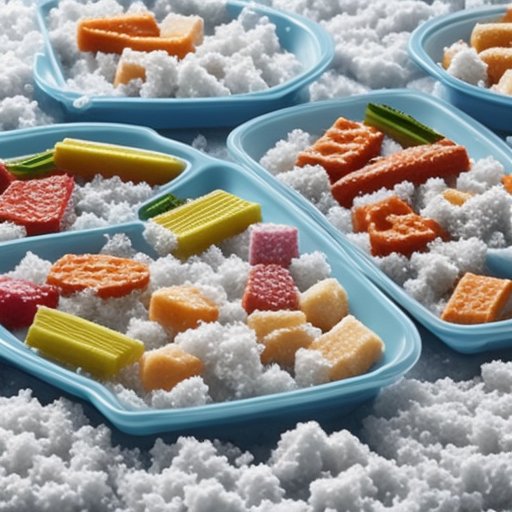
People often claim that some dishes taste better after a stint in the freezer. The truth is more nuanced. Freezing does not improve flavour on its own: done well, it preserves it. As for the famous "super freeze," it is not a magic phenomenon but a function of your appliance. Here is what actually happens when you freeze and then thaw food.
What Is "Super Freeze" (Fast Freezing)?
"Super freeze," also called fast freeze or quick freeze depending on the brand, is a freezer function, not a property of the food. When you switch it on, it forces the compressor to run continuously and drops the compartment temperature well below the usual -18 °C. The aim is to freeze food as quickly as possible.
Ideally you turn it on several hours, up to 24 h, before adding a large quantity of fresh food, then switch it off once freezing is complete. Leaving it on permanently is unnecessary and increases electricity consumption. To understand how the cold builds up inside an appliance, see also how long it takes for a fridge to reach its ideal temperature.
Fast or Slow Freezing: It All Comes Down to Ice Crystals
When food freezes, the water inside its cells turns into ice crystals. The faster the freezing, the smaller and more numerous these crystals are, which limits damage to the food's structure. Slow freezing, by contrast, produces large crystals that pierce the cell walls.
The result shows up at thawing: slowly frozen food loses more water (drip loss) and has a softer or drier texture. This is exactly what fast freezing aims to avoid. Smaller crystals better preserve the original texture, and therefore the quality you perceive when eating.
Does Freezing Really Intensify Flavour?
This is the misconception to correct: no, freezing does not intensify flavour. Research on frozen food quality shows that at best it preserves flavour, and it can even degrade it (off-flavours, texture loss, fat oxidation over time).
So where does the impression that some dishes taste better after thawing come from? From two things that have nothing to do with freezing itself:
- These dishes tolerate freezing well. Soups, stews, and saucy dishes already contain plenty of water and a homogeneous structure, so ice crystals barely harm their texture, unlike a salad or fresh fruit.
- Their flavours blend during cooking and cold resting. It is the same effect as a stew tasting better the next day: flavours diffuse and balance out over time. This happens in the fridge, not in the freezer. You find the same resting logic in other preparations, such as crepe batter that is best left to rest.
In other words, it is not extreme cold that makes a dish better, but its cooking and resting time.
Which Foods Freeze Well, and Which Don't?
Not all foods react the same way:
- Freeze very well: soups, stews, sauces, cooked dishes, bread, raw meat and fish frozen quickly, fruit destined for smoothies or baking.
- Freeze poorly: fruit and vegetables with a high water content eaten raw (lettuce, cucumber, tomato, garnish strawberries) turn soft or soggy when thawed, because their cells burst. Some cream- or egg-based sauces can also split.
Before piling everything into the freezer, remember that storage matters on the fresh side too: see which fruits and vegetables you should never store together.
In Practice: Freezing Well to Preserve Flavour
- Freeze quickly, in portions, in airtight containers to limit air and oxidation.
- Label with the freezing date.
- Thaw in the fridge whenever possible, which is safer from a food-safety standpoint.
- If your appliance builds up frost, a No Frost model limits ice formation and makes storage easier.
Conclusion
Frozen foods do not taste "better" by magic. Fast freezing done well best preserves texture and flavour, while the dishes that seem better owe it to their cooking and cold resting, not to the freezer. Understanding this mechanism simply helps you get the most out of your refrigerator and freezer.
To go further: a scientific review of ice crystal formation and frozen food quality details these mechanisms, and manufacturers explain how to use the fast freeze function.