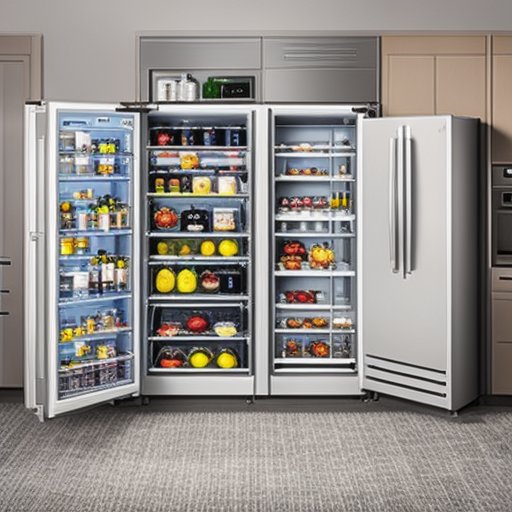
The refrigerator is a staple of the modern kitchen, but did you know there are more than 10 different types of fridges? From compact models for a studio to high-tech connected refrigerators, this guide helps you make the right choice based on your space, budget, and cooking habits. The prices quoted are indicative for the Swiss market (retailers such as Fust or Interdiscount) and vary with promotions.
1. Classic Fridges: Simplicity and Versatility
Single Door Fridge
- Ideal for small spaces (studio, student room).
- Indicative price: from CHF 150 to CHF 500.
- Disadvantage: small freezer capacity (usually 10 to 20 litres maximum).
Top-Freezer (2 doors)
- Freezer on top, refrigerator below.
- Average capacity: from 250 to 400 litres.
- Energy consumption: varies by model, generally average.
Note: classic models sometimes include "table top" versions (reduced height, about 85 cm) to fit under a countertop.
2. American Fridges: Luxury and Features
Features
- Capacity generally between 500 and 700 litres (ideal for families of 4 or more).
- Built-in water/ice dispenser (side-by-side opening).
- Indicative price in Switzerland: from around CHF 1000, often CHF 1500 to 3500 for well-equipped models.
Good to know
- Consumption: from 400 to 600 kWh/year (compared to about 200 kWh/year for a classic refrigerator).
- Minimum width: about 90 cm, so check the available space.
- Noise: often slightly higher than standard refrigerators (between 40 and 45 dB). If quiet running matters, see how many decibels make for a quiet refrigerator.
3. French Door Fridges: Design and Practicality
Advantages
- Two doors for the refrigerator section plus one (or two) freezer drawers below.
- Adjustable temperature by zone (meats, vegetables, etc.).
- Examples: high-end models with an integrated touch screen.
For whom?
- Households that love cooking and storing large dishes.
- Indicative budget: from CHF 1500 to 4500.
Note: to tell a combined model from a two-door fridge, see our review of the combined refrigerator.
4. Built-in Fridges: Discreet Aesthetics
For whom?
- Those who want a sleek, minimalist kitchen.
- Compatible with fronts matching kitchen furniture.
Points to watch
- Higher installation cost (carpentry work and fastening system).
- Ventilation: space must be provided around the appliance to prevent overheating.
- Variants: "built-in" is sometimes distinguished from "integrated"; the difference lies in the type of hinges and decorative panels.
5. Eco-Friendly Fridges: Low Consumption
- Innovations
- Inverter compressors (up to 30% more energy savings).
- R600a gas (isobutane) with a lower environmental impact than older gases.
- Since March 2021, the energy label uses a single scale from A (most efficient) to G, without the old A+, A++ and A+++ classes. An appliance formerly rated A+++ now typically falls into B, C or D: the best benchmark remains the actual consumption in kWh/year.
Key figure: for the same volume, a model that scores well on the new scale can consume much less than an older entry-level appliance. Always compare the annual consumption shown on the official energy label.
- Good to know
- Some "No Frost" refrigerators prevent frost formation and avoid manual defrosting: see what No Frost means. To go further, read our eco refrigerator buying guide.
6. Smart Fridges: The Connected Kitchen
Key Features
- Internal camera to monitor contents remotely (via smartphone).
- Food recognition and recipe suggestions.
- Expiry or open-door alerts.
- Touch screen to manage shopping lists or consult recipes.
Leading Brands
- LG Smart InstaView, Bosch Home Connect, Samsung Family Hub.
Note: connected refrigerators may be slightly more energy-intensive due to electronic features (Wi-Fi, LED screen, etc.). Compare features carefully before purchasing.
7. Compact Alternatives
Office Fridge (mini-fridge)
- Capacity from 50 to 100 litres (perfect for drinks or small quantities).
- Generally low noise level (under 40 dB).
- Ideal for an office, hotel room, or bar area.
Absorption Fridge
- Operates on gas or electricity (ideal for motorhomes or boats).
- Advantage: very quiet.
- Disadvantage: generally less efficient for quick cooling and more expensive. For travel use, compare it with a passive cooler.
Conclusion: How to Choose Well?
Calculate the required capacity
- Count about 50 to 100 litres per person in the household.
- Plan for more if you cook a lot or stock up (frozen dishes, large packages).
Compare the energy label
- Since 2021, a single scale from A to G. Above all, compare the consumption in kWh/year.
- Investing a bit more in a high-performance model can be cost-effective in the long run.
Test the ergonomics
- Adjustable shelves, LED lighting, ergonomic handle, practical vegetable drawers.
- Check the handle height and the size of the door bins.
Check the noise level
- Important if you live in a studio or if your fridge is in an open living area.
Did you know?
- A well-maintained refrigerator lasts 10 to 15 years. Clean the seals and defrost regularly to optimise its lifespan. When the time comes, ask yourself whether to repair or replace your fridge.
- Leave at least 5 cm of space between the back of your fridge and the wall for proper ventilation.
Quick Summary
- Single Door or Top-Freezer Fridge: economical and compact.
- American Fridge: large capacity, water/ice dispenser, more energy-intensive.
- French Door Fridge: design, modularity, higher budget.
- Built-in: ideal for an integrated kitchen, requires good ventilation.
- Eco Fridge: inverter compressor, less polluting gas, efficient energy label.
- Smart (connected): cameras, alerts, shopping management, higher price.
- Compact Alternatives: mini-fridge, absorption fridge for camping.
By following these tips, you can choose the refrigerator that best meets your needs and lifestyle. Happy searching and happy shopping!