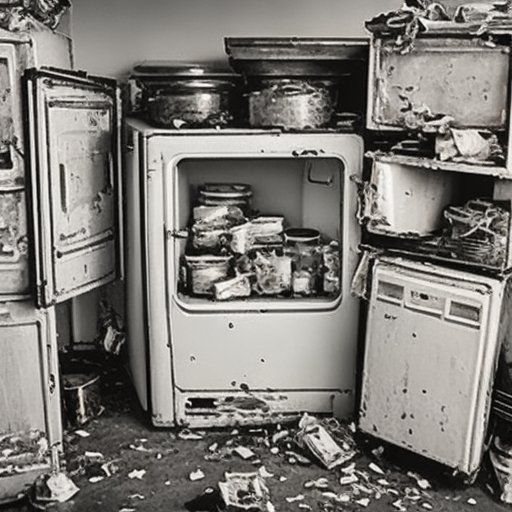
Disposing of an old refrigerator in Switzerland is not just a matter of leaving it outside the building. A fridge contains recoverable metals, oil, insulation foam and sometimes refrigerants that need careful handling. The good news is that, for a household, disposal is usually simple and free when the appliance goes through the right channel.
The practical rule is short: return the refrigerator to a retailer that sells this type of appliance, take it to an official collection point, or use a recycling centre equipped for electrical appliances. Avoid fly-tipping, untraceable pick-ups and any attempt to dismantle the cooling circuit yourself.
What Swiss rules say
Refrigerators fall under ORDEE, the Swiss ordinance on the return, take-back and disposal of electrical and electronic equipment. SENS eRecycling explains that retailers must take back used appliances free of charge when they are of the same type as products in their range. Consumers can also hand in used electrical and electronic appliances free of charge to manufacturers, retailers, importers and collection centres.
The canton of Vaud gives the same guidance: old electrical and electronic appliances must not be thrown away with household waste. They should be returned to retailers, taken to an official collection point or deposited in a recycling centre that accepts them. The system is financed through the advance recycling fee included in the purchase price of many appliances.
Where to take an old fridge
1. To the retailer or delivery company
If you are buying a new refrigerator, ask for take-back of the old one when placing the order. The legal take-back itself is free, but transport, stairs, door removal or delivery services may be charged according to the retailer's conditions.
Even without a new purchase, a retailer selling refrigerators must accept an appliance of the same type as its range. Call before turning up with a large fridge, as shops may need to organise space and handling.
2. To a recycling centre or official collection point
Municipalities and regional waste services list the recycling centres that accept large electrical appliances. Check three points before loading the appliance:
- opening times and bulky waste days;
- whether you need a resident card or proof of address;
- the specific instructions for refrigeration appliances, which are not always placed with ordinary scrap metal.
In French-speaking Switzerland, the details often vary by municipality. Geneva points residents towards ESREC sites and municipal bulky waste collections. In Vaud, the cantonal page on electronic waste confirms take-back by retailers, collection points and equipped recycling centres. In Valais, start with your municipality or cantonal waste service to find the local route.
3. Through a home collection service
Home collection is useful if the appliance is heavy, you do not have a suitable vehicle, or you are clearing several bulky items at once. Choose a provider that clearly states where the appliances go afterwards. The aim is for the fridge to reach a recognised recycling stream, not an improvised storage site or an unclear export route.
For a wider clearance, a service such as BigSack.ch can be convenient, especially with several bulky items. For the fridge itself, keep the same requirement: ORDEE route, recognised collection point or identifiable recycling partner.
Why you should not dismantle the fridge yourself
An old refrigerator is not just a metal cabinet. SENS eRecycling explains that refrigerator recycling extracts refrigerants, oil and gases contained in some insulation foams, then recovers ferrous metals, non-ferrous metals and plastics. The organisation states that, on average, 83% of the components of refrigeration appliances are reusable.
Amateur dismantling can release unwanted substances or create a safety risk, especially with some modern flammable refrigerants such as isobutane. If the compressor, pipes or rear of the appliance are damaged, do not try to repair or empty the circuit. Have the appliance collected as it is by a channel designed for that work.
Before collection: what to do
Empty the appliance, defrost the freezer compartment if needed and wipe away water. Leave the doors ajar if the fridge has to wait for a few hours, to limit smells and mould. Remove only accessories that come out easily, such as shelves, if the transporter or recycling centre asks for it.
Do not cut cables, pierce the circuit or remove the compressor. If the appliance still works, first consider whether repair, local donation or responsible resale makes sense. Our guide on whether to repair or replace your fridge can help you decide, and where to repair your fridge in Switzerland is useful if the fault is not final.
Vaud, Valais, Geneva: the quick route
For Vaud, check the cantonal page on electronic waste, then your municipality's page for the recycling centre address and access rules. For Geneva, use the canton's waste guide or ESREC information, then check whether your municipality offers bulky waste collection by appointment. For Valais, municipalities are usually the most reliable starting point because dates, sites and drop-off rules differ by region.
If you are replacing the appliance, it is also a good moment to choose a more efficient model. The guide to reducing refrigerator energy use fits naturally with that decision.
Useful sources
- SENS eRecycling on ORDEE
- SENS eRecycling on refrigerator recycling
- Canton of Vaud: electronic waste
- Canton of Geneva: where to dispose of waste
Key takeaway
To recycle an old refrigerator in Switzerland, choose the most traceable option: retailer, official collection point, equipped recycling centre or collection service that passes the appliance to a recognised channel. Basic take-back is free for the appliances concerned, but logistics may cost extra if you request transport or home handling. Above all, do not dismantle the cooling circuit yourself: the environmental benefit comes from professional treatment of those components.