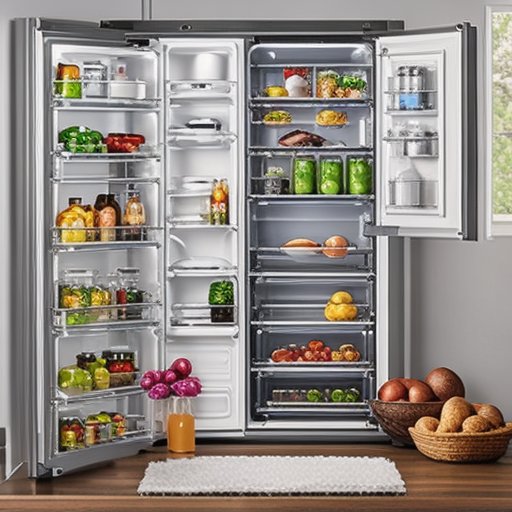
No Frost refrigerators are increasingly popular among consumers due to their easy maintenance and ability to prevent frost formation. If you're considering investing in this type of appliance or already own one, you might be wondering what tips and best practices to follow to optimize its performance. In this article, we will discuss in detail how a No Frost refrigerator works, the best ways to install it and set its temperature, as well as tips for organizing and storing your food efficiently. We will also cover how to maintain your appliance to extend its lifespan and reduce your electricity bill. Finally, we will offer some simple solutions to address everyday issues, such as unusual noises or odors.
With this comprehensive guide, you'll know everything about using a No Frost refrigerator and be able to take full advantage of it. Whether you're an amateur cook or just storing your weekly food supplies, you'll find tips here applicable to every situation. By following these recommendations, you'll ensure optimal use of your refrigerator while preserving the quality and freshness of your food, which is crucial for your health. Take the time to read through and implement the suggestions presented here, and you'll enjoy a high-performing and durable refrigerator.
What is a No Frost Refrigerator?
No Frost technology is a cooling system designed to prevent frost formation in the refrigerator and freezer compartments. Unlike traditional refrigerators where you need to defrost regularly, the No Frost model is equipped with a fan and a cooling circuit that ensures even air circulation. This constant circulation prevents condensation from turning into frost. In practice, the evaporator that produces the cold is hidden behind a panel: frost builds up on it, then a defrost heater switches on automatically at regular intervals to melt it, and the water drains into a tray where it evaporates. A fan then blows this cold, dry air throughout the appliance, which stops ice from building up on the walls (HowStuffWorks). This principle keeps your food in a fresh environment without freezing.
This technical innovation translates into a significant time-saving and appreciable ease of use. You no longer need to perform regular manual defrosting. Moreover, the No Frost refrigerator prevents ice sheets from forming on packaging and your food (the "frost" or "icing"), which can lead to a loss of quality. With this system, you are assured of a constant temperature, which improves food preservation. It remains to understand its daily operation to avoid any errors.
The Advantages of a No Frost Refrigerator
If you're still hesitating to buy a No Frost refrigerator, it's important to know the main advantages of this type of appliance. First, the absence of frost saves you the chore of defrosting. You save time and, above all, avoid the inconvenience of having to transfer food and frozen products during handling. The No Frost operation also ensures better cold distribution throughout the refrigerator space, contributing to maintaining a consistent temperature.
Furthermore, thanks to this humidity control, food quality is preserved longer. The risks of contamination by stagnant water or partial freezing of certain products are reduced. Another significant point is that some No Frost refrigerators incorporate additional technologies, such as economical LED lighting, antibacterial options, or specific cold zones for meats or fish. Finally, from an energy perspective, a recent, well-adjusted No Frost appliance remains efficient and durable.
One point deserves an honest caveat, though: this automatic defrosting relies on a heating element that switches on regularly, so at a comparable size and energy class, a No Frost model often uses slightly more electricity than a well-maintained static-cooling appliance. Another trade-off is that the ventilated, dried air can dry out poorly protected food (this is what causes freezer burn). So wrap your products well in airtight containers or cling film.
How to Properly Install Your No Frost Refrigerator
Installing your No Frost refrigerator must follow certain guidelines to ensure the appliance operates optimally. First of all, make sure to place it in a dry and ventilated area, away from any heat source. Avoid placing it too close to a wall or furniture, as it needs space to circulate air and better regulate temperature. Consult the manufacturer's manual for the recommended clearance distance.
Also, ensure that the floor is stable and level. An improperly adjusted refrigerator can cause vibrations and unusual noises. If necessary, adjust the appliance's feet. Before the first start-up, wait a few hours after transport to allow the refrigerant to stabilize. Then plug in the appliance and let it reach its ideal temperature for a few hours before storing food. Finally, respect the load limitations and avoid overloading the refrigerator too quickly. This will guarantee the best performance and a longer lifespan.
Properly Organizing Food in a No Frost Refrigerator
A No Frost refrigerator offers a consistent temperature, but that doesn't mean you can place food randomly. To maximize freshness and limit contamination risks, you should follow a few simple rules. First, store meats and fish in the coldest zones, often located at the bottom or in special dedicated compartments. Vegetables, on the other hand, should be placed in the vegetable drawer to maintain their freshness at an appropriate humidity level.
For cheeses, homemade culinary preparations, and leftovers, use the central part. Avoid overloading the refrigerator, as air must circulate freely to maintain a stable temperature. As for the doors, they are ideal for storing bottles, eggs, and condiments. This allows you to optimize space and reduce your access time to products you use regularly. Finally, regularly rotate your food. Place newly purchased products behind older ones, so you consume what's closest to the expiration date first. For a complete zone-by-zone layout, see our guide on how to organise your fridge.
Maintenance and Cleaning
Maintaining a No Frost refrigerator is made easier by the absence of frost, but that doesn't exempt you from regular cleaning. Once or twice a month, you can wipe the interior walls with a cloth soaked in soapy water to remove impurities and persistent odors. Remember to remove all perishable items beforehand or store them briefly in a cooler. Then rinse the surfaces with a damp cloth before thoroughly drying with a dry cloth.
To combat odors, you can use baking soda. Place a small container of it at the bottom of the refrigerator to absorb residual odors. Also, remember to regularly clean the door seal, as mold often accumulates there. Simply use a soft toothbrush and warm soapy water. For a step-by-step method, follow our guide on how to clean your refrigerator effectively. Finally, don't forget to dust the refrigerator's rear grille every six months. Accumulated dust can hinder heat dissipation and lead to increased energy consumption.
Optimizing the Temperature of Your No Frost Refrigerator
One of the most common questions is the ideal temperature for a No Frost refrigerator. Generally, the recommended range is between 3 and 5 °C for the refrigerator section, and around -18 °C for the freezer (see our detailed guide on how to adjust your fridge temperature). However, these values may vary depending on your usage. For example, if you store particularly sensitive products, you can set the temperature to 3 °C. To maintain this constant temperature, ensure that the internal setting matches your needs.
A final tip for maintaining a stable temperature is not to leave the appliance door open longer than necessary. If you're looking for a specific item, try to prepare your list. Open the door, grab the item, and close it quickly. Each time the door remains open, the appliance will expend more energy to return to its normal temperature. Additionally, avoid placing hot food in the refrigerator. Let them cool to room temperature before storing them to avoid disrupting the overall temperature.
Tips for Reducing Energy Consumption
Even though many No Frost refrigerators are now designed to be energy-efficient, it's important to adopt good practices to reduce energy consumption and, consequently, the electricity bill. First, regularly check the door seal's tightness. A porous or damaged seal will lead to cold loss. Then, position your refrigerator in a cool place away from heat sources (radiator, oven, stove). This precaution will prevent the appliance from compensating for significant temperature differences.
Furthermore, proceed with automatic defrosting. No Frost refrigerators are already designed to prevent frost formation, but if you detect a potential problem with localized ice formation, don't hesitate to contact customer service or check if the operating mode has been accidentally changed. Finally, get into the habit of quickly storing your groceries and not leaving the refrigerator door open unnecessarily. In short, good organization of your storage space and adherence to the manufacturer's recommended configuration will help you save energy.
Common Problems and Their Solutions
Like any household appliance, a No Frost refrigerator may encounter malfunctions during its life. Here are some common problems and possible solutions. If you hear unusual noises, first check that your refrigerator is stable and not touching a wall or furniture. Also, ensure that you haven't overloaded the appliance's interior. Often, noises are due to vibrations amplified by an object in contact with the walls.
Another frequent issue is the presence of unpleasant odors. In this case, first check that you haven't left an expired or poorly wrapped food item. Then clean all internal surfaces, including bins and shelves. Finally, place a small container of baking soda or activated charcoal to absorb persistent odors. If the problem persists despite everything, an internal component may be faulty, and you may need to contact an authorized repairer.
If you notice insufficient defrosting or frost formation, start by checking that the fan inside your refrigerator is spinning freely and that air circulation is not obstructed by packaging. It's also possible that your appliance is too close to a heat source or improperly adjusted in terms of temperature. Review the settings according to the manual. If none of these measures solve the problem, professional maintenance or repair may be necessary.
Tips for Extending the Lifespan of Your Refrigerator
Investing in a No Frost refrigerator represents a certain budget, so it's useful to know some tips to extend your appliance's lifespan. First, strictly follow the manufacturer's instructions regarding temperature and maximum load. Avoid placing hot pots in the refrigerator or cramming too much food in it. Focus on good organization by compartmentalizing different product families. Additionally, make it a habit to check the door seal's condition and clean or replace it if necessary.
Regular maintenance of the rear grille or condenser is also essential. When this area is covered in dust, it prevents proper heat evacuation, forcing the compressor to work harder and increasing the appliance's wear. Vacuum or dust the grille and compressor twice a year. Finally, monitor the energy data indicated by the appliance, and consult the manual or after-sales service if in doubt. By taking care of your refrigerator, you'll save money and minimize the environmental impact.
Why Food Rotation is So Important
Food rotation is particularly important in a No Frost refrigerator because the uniform cooling technology can give the impression that everything keeps for a long time. However, to avoid waste and contamination, make sure to consume the oldest foods first. Organize your shelves according to expiration dates, placing products with a close expiration date at the front. Besides limiting waste, you also avoid mixing odors and microbial proliferation.
To better manage rotation, label your containers. When boxing homemade preparations or meal leftovers, write down the cooking or refrigeration date. This tip helps you quickly know what you need to consume first. Of course, a No Frost refrigerator maintains a stable temperature and reduces humidity, but a perishable product remains perishable. Good stock management in your refrigerator is therefore essential for healthy and tasty meals.
Tips for Optimal Storage
Even with a ventilated air system, a No Frost refrigerator can be better utilized if you adopt certain storage habits. One of the first tips is to use airtight containers to store leftovers, cut vegetables, or culinary preparations. This limits odor dispersion and protects against contamination. Opt for transparent containers to quickly know what they contain without having to open them.
Regarding odorous foods like cheese or certain spicy dishes, make sure to double their protection with plastic wrap and a sealed container. Finally, keep the refrigerator interior well-organized by categorizing each space. Define, for example, a shelf for dairy products, another for deli meats and meat, a bin for vegetables and fruits, and a shelf for cooked dishes. This organization will save you time and help maintain a healthy environment.
Checking Air Circulation
Air circulation is at the heart of No Frost technology. It's crucial not to obstruct it. Avoid placing utensils or boxes against the ventilation grilles. Similarly, regularly check that packaging doesn't block the ventilation slots. When loading your refrigerator, leave a few centimeters of space between the walls and the food so that air can circulate freely.
If you notice that some compartments are not cold enough or have an abnormal humidity level, it may be a blockage issue. In this case, move or reorganize your food. If the problem persists, check the fan's operation and carefully clean the ventilation grilles. Finally, consider the specifics of each model, as some have a single fan while others have multiple, affecting air distribution.
How to Avoid Persistent Odors
In a No Frost refrigerator, air circulation can sometimes accentuate odor spread if you don't store your food properly. The first step is to identify the odor's source. Check all products, especially those stored for a long time or in poorly sealed containers. Then, eliminate anything expired or suspicious. Clean the refrigerator thoroughly with warm water and mild soap. Rinse and dry thoroughly.
To prevent odors from returning, place a small container of baking soda or a piece of activated charcoal in a corner of the refrigerator. These products are known for their odor-absorbing capabilities. Also, make it a habit to wrap odorous foods well. Don't hesitate to use an airtight container if the odor is particularly strong. Meanwhile, monitor the cleanliness of your vegetable drawer and ventilation grille. Targeted maintenance will help maintain a neutral atmosphere.
Food Safety and Hygiene
Beyond the odor issue, food safety is paramount to preserving your health. Even if the No Frost refrigerator ensures a consistent temperature, it's essential to ensure on your end that the cold chain is respected from the store to home. Use insulated bags to transport frozen products to limit temperature rise. Once home, promptly place products in the refrigerator.
Regularly check expiration dates and adopt the first in, first out rule to avoid keeping the same foods for too long. You can also check the internal temperature with a refrigerator thermometer. This precaution remains useful to confirm the proper functioning of the No Frost system. By taking these few measures, you'll protect your health and avoid throwing away still consumable food.
Which Products to Avoid in a No Frost Refrigerator
Some products do not require refrigerated storage, and it's best not to store them in a No Frost refrigerator. Fruits and vegetables too sensitive to cold, like bananas, avocados, or tomatoes, lose some of their taste qualities and texture when stored in the cold. Honey, olive oil, or bread also undergo texture changes if placed at low temperatures.
Some hard or well-aged cheeses can withstand storage at room temperature, but this depends on the climate and desired storage duration. In general, consult the packaging instructions or the manufacturer's recommendation. In any case, take the time to assess whether a food truly benefits from the cold or if placing it in the refrigerator is sometimes an unjustified habit. To go further, see our list of foods you should never put in the fridge.
Conclusion
Using a No Frost refrigerator offers many advantages for preserving your food, provided you know how to set it and maintain it. By following installation tips, respecting a methodical organization, and maintaining an appropriate temperature, you'll fully enjoy No Frost technology. You'll also minimize frost formation and avoid tedious tasks like manual defrosting. By taking care of your appliance, you'll not only extend its lifespan but also improve the quality of your food preservation.
Regular cleaning and attention to food rotation contribute to a healthy environment and tastier meals. Moreover, reducing energy consumption involves simple daily actions, like quickly closing the door or checking the seal's condition. No Frost refrigerators are designed to make your culinary life easier and save you time. However, they require a minimum of vigilance to operate optimally. By applying these tips, you'll be able to enjoy your refrigerator for a long time and save energy while protecting the quality of your food.