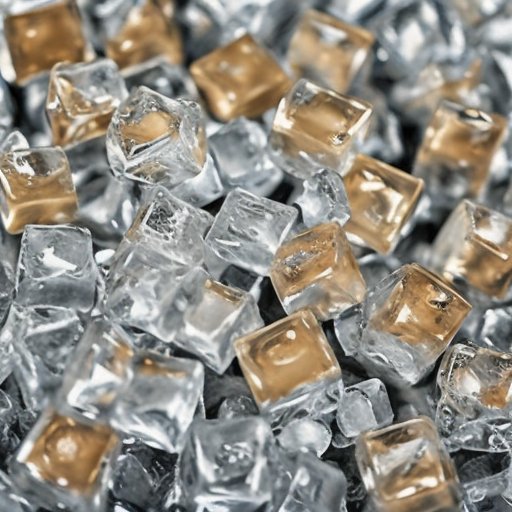
Making crystal-clear ice cubes may seem challenging, but with the right techniques you can achieve perfect ice cubes for your drinks. Here are the tips that actually work and the science behind making ultra-clear ice.
Why are ice cubes often cloudy?
In a home freezer, water freezes from every side at once through the walls of the tray. The ice therefore forms from the outside inwards and pushes dissolved air, gases and minerals towards the centre, because they cannot fit into the ice crystal. These bubbles and impurities trapped in the core of the cube scatter light and give it that white, opaque look. The main cause of cloudiness is trapped dissolved air, more than the mineral content of the water.
The trick that really matters: directional freezing
To get clear ice, the ideal approach is to force the water to freeze in a single direction, from top to bottom. The bubbles and impurities are then pushed ahead of the ice front towards the bottom, instead of being trapped in the centre. This is how commercial bar ice machines work, and it is the most effective method at home.
The cooler method
Place a small insulated cooler filled with water, without its lid, in your freezer. The insulated walls stop the water from freezing on the sides and bottom, so it freezes slowly from the surface down. Impurities migrate towards the still-liquid bottom. Remove the block before it freezes solid (after roughly 18 to 24 hours), discard the cloudy part at the bottom, then cut the clear part into cubes.
Additional tips
Filter the water
Filtered or distilled water contains fewer minerals and particles, which helps clarity a little. It is most useful if your water is very hard.
Boiled water: a limited effect
Boiling the water and letting it cool drives off some of the dissolved gases, which can make the cubes a little clearer. The effect stays modest compared with directional freezing: without controlling the direction of freezing, cubes from a standard tray will remain largely cloudy. Treat boiled water as a complement, not the main solution.
Freeze slowly
Slower freezing gives bubbles time to escape. For this specific task, avoid the fast-freeze (super freeze) function and do not push the tray against the coldest wall of the freezer.
Good to know about your freezer
A compartment held around -18 °C is more than enough to make ice cubes; there is no need to go colder. If your appliance is a No Frost model, the dry-air circulation limits frost but also dries the surface of uncovered cubes, which can shrink over time, so cover them or keep them in a bag. To keep ice on the move without electricity, a passive cooler holds it longer than you might think. And if you are wondering how long a freezer takes to reach its ideal temperature, expect several hours before ice production is at its best.
Conclusion
Perfectly clear ice cubes depend less on the water than on the direction of freezing: let the water freeze slowly, in a single direction, and push the impurities into a zone you will discard. Filtering and boiling the water helps a little, but directional freezing is what makes the real difference. Try the cooler method and compare the result.