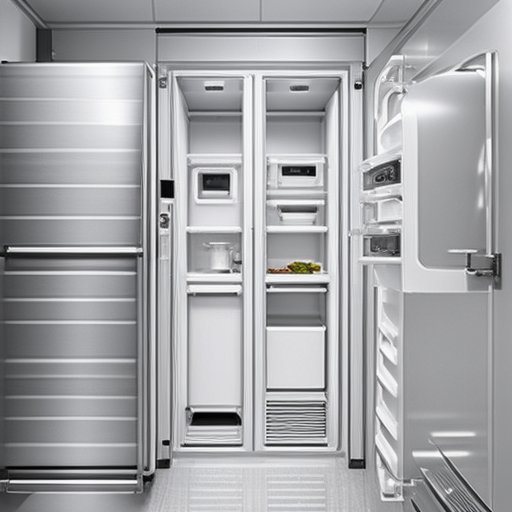
Changing the door opening direction of a refrigerator is a common question many people ask when setting up their kitchen. It's natural to want to adapt the door opening to the room layout, the refrigerator's position, or to optimize circulation space. In some households, this adaptability can make the difference between a friendly kitchen and a poorly organized space. Most modern refrigerators offer the possibility to change the door opening direction. However, before undertaking this task, there are several factors to consider, whether in terms of safety, compatibility, or warranty.
In this article, we will review the essential points to help you make an informed decision and proceed correctly. We will discuss the reasons you might want to change the door opening direction, possible incompatibilities, the necessary tools and steps, as well as practical tips to successfully perform this maneuver without damaging your appliance or compromising its energy performance. You will also discover tips for properly preparing the door's path in the kitchen, precautions to consider, and alternative solutions if changing the door opening direction is not possible or proves inconvenient.
Why Consider Changing the Door Opening Direction
Several reasons may lead you to want to change the door opening direction of your refrigerator. Although not all apply to every case, most users will find significant advantages, especially in a context where ergonomics and ease of use are paramount.
Space Optimization
In some kitchens, the arrangement of furniture and appliances requires precise organization. If the refrigerator is positioned in a corner of the room, the door opening might block access to cabinets, impede passage, or hit a counter. Reversing the opening can significantly improve circulation.Ease of Access to Food
Depending on the configuration of your countertops and storage, it may be more convenient to open the door to the left or right. This also depends on the user's dominant hand. Some left-handed people may prefer an opening to the left, while most right-handed people will be more comfortable with an opening to the right.Aesthetic Improvement
There may be aesthetic considerations for harmonizing the interior. Sometimes, aligning doors (refrigerator, dishwasher, oven) creates visual harmony. Changing the opening direction can enhance the overall appearance of the kitchen.Manufacturer or Lease Requirements
In some rental agreements, the landlord may require the refrigerator to occupy a specific location. If the original opening poses a problem, changing the door direction may be recommended. However, it is advisable to check with the landlord or manufacturer to ensure warranty validity.
Checking Compatibility and Warranty
Before proceeding with the modification, it is strongly advised to consult the refrigerator's user manual and inquire with the brand's customer service. For a long time, appliance manufacturers have anticipated this functionality as it provides great user comfort. However, some very specific models (for example, those that are tightly built-in or have a double door on the upper part) do not allow this operation or make it very challenging. Most recent free-standing appliances are nonetheless built with reversible hinges, a feature usually stated on the spec sheet. When in doubt, an illustrated teardown guide such as the one from iFixit walks through the procedure step by step.
Moreover, some stores or manufacturers offer professional installation services, sometimes included in the warranty, which include changing the door opening direction. Before attempting to make the modification yourself, check several points:
- Concerned Model: Ensure it is explicitly stated that the manipulation is feasible.
- Parts Provided or Not: Some brands provide an additional hinge kit or suitable screws.
- Warranty Maintenance: Check if changing the door opening direction yourself voids or restricts the warranty.
Preparing the Equipment and Space
To successfully perform the task, it is essential to have the right equipment and to clear enough space around the refrigerator. You will indeed need to handle and remove parts of your appliance, which requires a minimum of space to place the detached doors and hinges.
- Tools: Generally, you will need a Phillips screwdriver, a flathead screwdriver, a socket wrench or spanner (depending on the model), and possibly a small knife to remove plastic covers.
- Cloths and Towels: To protect the floor and absorb any water that might spill if the refrigerator is placed in a damp area or if you touch the cooling circuit.
- Support for Resting the Door: A table or countertop at an adequate height to avoid placing the door directly on the floor.
- Box for Screws: It is always good to gather screws and other parts in a single container to avoid losing them.
It is recommended to unplug the appliance before performing any manipulation. Even though the change mainly involves removing and replacing screws and hinges, it's better to be cautious. Remember to remove any food that might obstruct the maneuver or be damaged by exposure to ambient air during the work.
Procedure Steps
Although each refrigerator model may have specific features, the general process remains similar. Here are the main steps to follow:
Remove All Interior Elements
It is preferable to remove shelves, vegetable drawers, and door racks to prevent them from falling during the manipulation. This also protects these fragile elements from accidental shocks.Remove the Top and Bottom Covers
Depending on your refrigerator, you will find plastic covers on the top and bottom that cover the hinges. Remove them gently with a flathead screwdriver or a thin knife.Unscrew the Top Hinge
Once the top cover is removed, you will generally access the screws of the top hinge. Unscrew them while firmly holding the refrigerator door to control its descent.Dismantle the Door
After removing the top hinge, the door remains held by the bottom or middle hinge. Carefully remove the door and place it on a stable support that you have prepared to avoid scratches.Repeat the Operation for the Freezer Door (if a Combined Refrigerator)
If you have a combined refrigerator (refrigerator and freezer section), you will need to repeat the same operation for the freezer door. Each door indeed has its own hinges.Attach the Hinges on the Other Side
Generally, there are holes provided on the opposite side of the refrigerator. You just need to reposition the hinges and screw them into the corresponding holes. Remember to reverse the order, meaning the top hinge will be on the left instead of the right, for example.Screw the Door Back On
Place the door on the bottom or middle hinge you just fixed, then screw the top or bottom hinge back on as the case may be. Tighten sufficiently to hold the door in place, while checking its balance before proceeding definitively.Replace the Covers and Adjust
Reinstall the plastic covers on the hinges now installed on the other side. Check the door alignment and, if possible, adjust the airflow or stops so that the door closes correctly. If you notice a misalignment, you can adjust by slightly loosening the hinge screws and moving the door a few millimeters.Reconnect the Refrigerator
Once all doors are correctly fixed and checked, reconnect the appliance. Monitor its operation during the first few hours to ensure there are no abnormal noises or sealing issues.
This procedure, relatively simple in principle, must be carried out methodically and carefully. The main risk concerns the improper fixation of the hinges, which could lead to insulation or safety problems.
Precautions to Respect
Although the operation is within reach of most amateur DIYers, certain safety and maintenance instructions should not be neglected:
Unplug the Appliance
This prevents the risk of electric shocks and allows you to work with peace of mind.Protect Floors and Surfaces
The doors can be heavy. Placing them directly on the floor risks damaging both the door and the floor. Laying a rug or thick blanket is a good precaution.Handle the Doors Carefully
Hinges and seals are relatively fragile parts. A shock to the seal can lead to poor sealing and thus increased electricity consumption or a faster deterioration of food.Check the Final Alignment
Once the door is installed, it is recommended to test it several times. If it does not close properly or shows a gap, readjust the hinge screws. A significant gap will mean energy losses and risks of motor overheating.Follow the Manufacturer's Instructions
Each refrigerator may have its specificities. It is therefore vital to consult the technical manual to know any particular steps related to your model.
What to Do if Changing the Door Opening Direction is Impossible
In some cases, the refrigerator does not allow for a change in door opening direction. Very old models or those designed for specific integration in a custom kitchen module do not have holes or dual-direction hinges. Similarly, some luxury models or atypical designs include double doors for aesthetic reasons. Here are several options if you find yourself in this type of configuration:
Reposition the Refrigerator
Sometimes, it is simpler to move the appliance rather than attempt a technical change. You will need to check feasibility in terms of water supply piping or electrical connection.Change the Model
If the refrigerator is too old or unsuitable for your needs, it may be worth opting for a new model that offers the possibility of changing the door opening direction.Call a Professional
In rare cases, an expert technician can perform a custom adaptation. But this can be costly and void any remaining warranty.
Considerations for Energy Performance
Many people overlook the potential impact of a poorly mounted door on the refrigerator's energy performance. A poorly sealed door allows warm outside air to enter and forces the compressor to run more to maintain the interior temperature. Conversely, a well-adjusted and properly closed door helps save on electricity bills.
When you change the door opening direction:
- Monitor the Condition of the Seals: If cracks or creases appear, consider replacing them.
- Check Automatic Closure: Depending on the refrigerator's tilt, the door should be able to close on its own (or at least be very easy to close). If you have to force it to stay closed, the appliance may not be level or the hinge may be improperly fixed.
Respecting these elements will allow you to optimize the longevity of your refrigerator and limit premature wear of the motor. Don't forget to defrost the appliance regularly if necessary. In the case of refrigerators with the No Frost function, this maintenance is significantly reduced, but it remains essential to monitor the proper functioning of the internal ventilation system.
Brand and Model Specificities
Each brand is different, and even within the same brand, there are variations according to the ranges. Here are some general guidelines:
- Bosch or Siemens: Generally, these German brands provide a detailed manual explaining the steps for reversing the door. They often offer a complete kit of alternative hinges and covers.
- Samsung and LG: These Asian manufacturers also offer reversible opening systems. The documentation often includes precise diagrams to assist consumers.
- Brandt or Electrolux: Same philosophy, with kits sometimes already included in the refrigerator packaging, simplifying the task.
- Built-in Models: For these appliances, you not only need to change the appliance door but sometimes also the cabinet door. Managing alignment can be more complex. You should then refer to the manufacturer's assembly plan and possibly call a kitchen designer.
Before any purchase, feel free to ask a store advisor if the model you are considering allows for changing the door opening direction. In case of an online purchase, consult the technical sheets or the FAQ section of the manufacturer's website.
Tips for Maintaining Food Safety
Whether or not you have changed the door opening direction, how you store your food in the refrigerator remains a key factor for food safety. Here are some reminders:
Storage Temperature
Set the refrigerator to a temperature between 0 and 4 degrees Celsius for the refrigeration section and aim for -18 degrees for the freezer. Health authorities recommend keeping the coldest zone at around 4 °C or below to slow pathogenic bacteria such as listeria. To fine-tune the setting by season, see our guide on the ideal fridge temperature.Food Placement
The coldest part is generally at the bottom. Raw meats and fish should be placed there, while dairy products and cooked dishes should be placed on the upper shelves. For a full room-by-room breakdown, see our guide on how to efficiently organise your refrigerator.Limit Door Opening
Each door opening causes an increase in the interior temperature. Try to group your actions and do not leave the door open for too long.Periodic Control
Equip yourself with a refrigerator thermometer and check the temperature several times a week. It's a simple gesture that ensures there is no malfunction.
Alternatives for Managing Space in Your Kitchen
Changing the door opening direction of the refrigerator is not the only solution for optimizing space. Other alternatives are worth considering:
- Opt for a More Compact Refrigerator
In small kitchens, a compact refrigerator may be sufficient, especially if you live alone or as a couple. The so-called "top" models (with an integrated freezer at the top) are often less bulky. Our tips to optimise your refrigerator space are a useful complement here. - Separate Refrigerator and Freezer
Instead of having a combined unit, some choose two separate appliances (a refrigerator and a chest freezer). This allows positioning these appliances wherever you want and easily accessing food without bending down. - Rearrange Kitchen Furniture
If the problem comes from the furniture, photograph your kitchen and consult a kitchen designer or interior architect. A simple rearrangement, or even the removal of a bulky element, can free up valuable space and make changing the refrigerator door direction less necessary.
When to Call a Professional
Even if changing the door opening direction is generally accessible, it is sometimes useful to seek professional help, especially if:
- The Refrigerator is Still Under Warranty: Some brands require authorized technicians to handle modifications to maintain the warranty.
- You Are Not Comfortable with DIY: It's better to spend a little more for quality service than to risk damaging an appliance.
- The Model is Atypical or High-End: For example, with American refrigerators, the manipulation can be much more complex, as they sometimes have an integrated drinking water circuit.
Conclusion
Changing the door opening direction of a refrigerator is an operation that brings significant comfort in daily life. It allows better adaptation of the appliance to the kitchen layout, facilitates circulation, and even reduces fatigue related to poor orientation. Most recent and mid to high-end models provide this functionality at the factory, with the necessary anchoring points and sometimes kits provided upon delivery.
However, it is essential to follow some basic rules. Before any manipulation, check technical compatibility and possible warranty coverage. Prepare the appropriate equipment, unplug the appliance, and work methodically. Once the process is complete, take the time to check the door's proper alignment, its sealing, and the overall functioning of the cooling system.
If the refrigerator is too old or does not support this type of operation, you can consider rearranging your living space or purchasing a new model, better suited to your needs and equipped with all the necessary customization options.
By following the described steps and being careful, you can change the door opening direction of your refrigerator and fully enjoy a better-optimized space. Enjoying fresh food in a well-organized kitchen is possible through a few simple adjustments, as long as you follow the guidelines and take basic precautions to extend the appliance's lifespan.
With this guide, you now have all the keys to seriously consider this modification and undertake the task with confidence. Don't forget, at the slightest doubt, to consult an expert or contact the manufacturer's technical service. This way, you will ensure the preservation of your investment and continue to benefit from a high-performing appliance under the best conditions.